

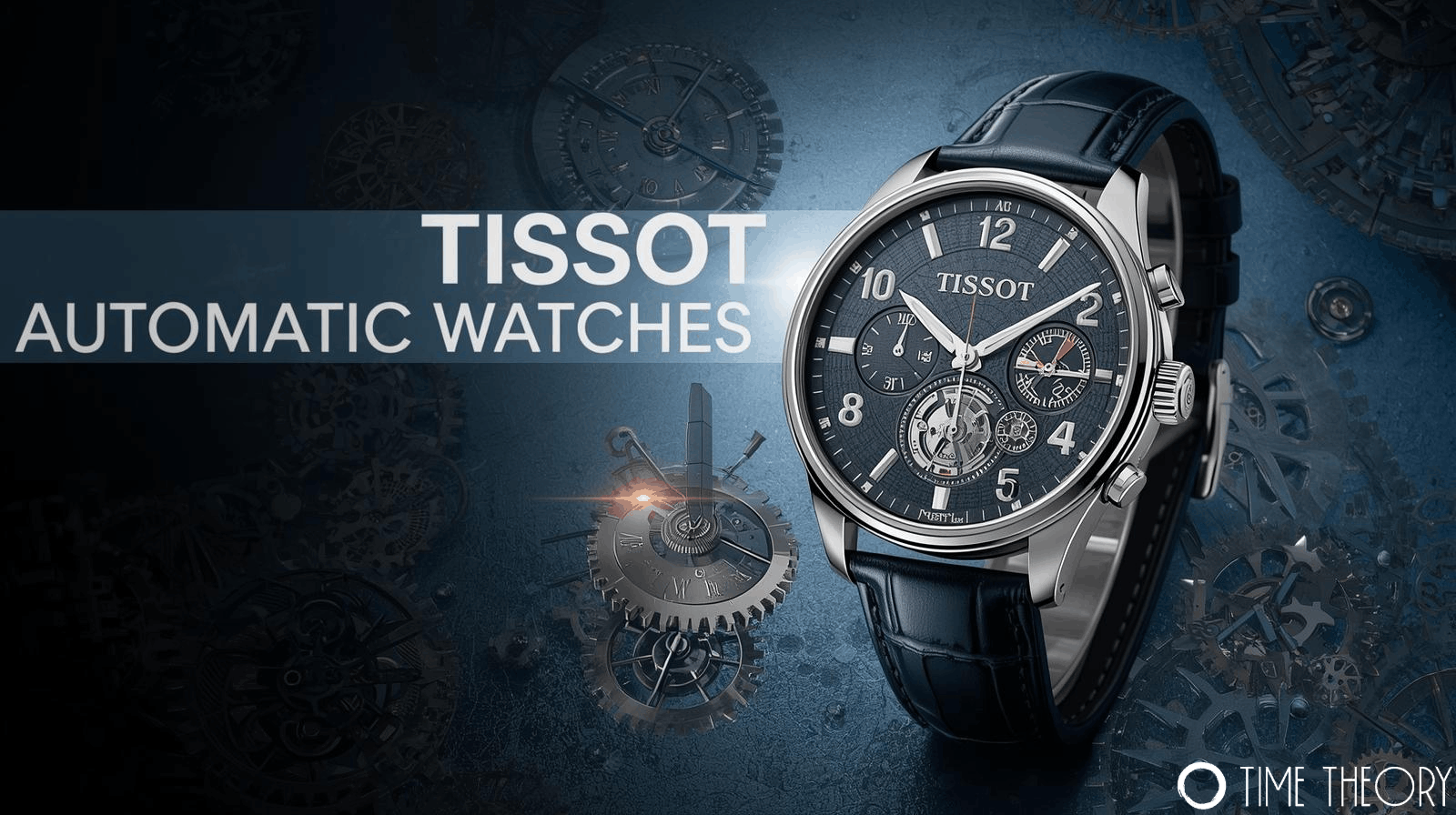
 Tissot automatic watches explained simply: they are marvels of Swiss engineering that power themselves through the movement of your wrist. For those new to the world of horology or looking to invest in a quality timepiece, understanding the mechanics behind these watches is essential. This guide breaks down exactly how they work, their longevity, and what you can expect from owning one.
How a Tissot Automatic Movement Works
At the heart of every Tissot automatic watch lies a complex mechanical movement. Unlike quartz watches, which rely on a battery for power, an automatic watch is self-winding.
Inside the case, there is a semi-circular metal weight called a rotor. As you move your arm throughout the day—whether you are walking, typing, or simply gesturing—gravity causes this rotor to swing. This swinging motion winds the mainspring, which stores energy. This energy is then released slowly and consistently to power the gears and move the watch hands.
If you wear your watch daily, it will continue to run without needing manual winding. However, if you take it off for an extended period, the power reserve will eventually deplete, and the watch will stop. Most Tissot automatic models feature a power reserve ranging from 38 to 80 hours, depending on the specific movement, such as the impressive Powermatic 80.
Are All Tissot Watches Automatic?
A common question for new buyers is: are all Tissot watches automatic? The short answer is no. Tissot offers a diverse range of timepieces powered by different mechanisms.
- Automatic: As described, these are self-winding mechanical watches powered by movement.
- Quartz: These are powered by a battery and are known for their high precision and low maintenance.
- Mechanical (Hand-Wound): These traditional watches require the wearer to manually wind the crown to power the mainspring.
- Tactile (T-Touch): These are advanced multifunction watches with touch-screen technology, often powered by solar energy.
When browsing the Tissot catalogue, look for “Automatic” or “Powermatic” on the dial or in the product description to ensure you are selecting a self-winding model.
Longevity and Durability
When investing in a Swiss timepiece, it is natural to ask: how long do Tissot watches last? Tissot has built a reputation for quality since 1853, and their watches are designed to last for generations with proper care.
The lifespan of an automatic watch largely depends on maintenance. A mechanical movement involves friction between moving parts and oils that lubricate them. Over time, these oils can dry out or degrade.
How Long Do Tissot Automatic Watches Last?
Specifically regarding the movement, how long do Tissot automatic watches last before needing service? Generally, a Tissot automatic watch can run indefinitely if serviced regularly. It is recommended to have the watch serviced by a certified professional every 3 to 5 years.
During a service, the watchmaker will disassemble the movement, clean the components, replace worn parts, and re-lubricate the mechanism. Without this maintenance, friction can eventually damage the gears, affecting accuracy and potentially causing the movement to seize. With routine care, your Tissot automatic watch can become a family heirloom.
Key Features of Tissot Automatic Models
Tissot automatic watches explained in terms of features reveals why they are so highly regarded.
- Powermatic 80: Many modern Tissot automatics feature the Powermatic 80 movement. This offers an 80-hour power reserve, meaning you can take the watch off on Friday and it will still be running on Monday morning.
- Nivachron Balance Spring: This technology provides excellent resistance to magnetic fields, which helps maintain the watch’s precision in our tech-heavy daily environments.
- Sapphire Crystal: Most models come with scratch-resistant sapphire crystal, ensuring the dial remains readable and pristine for years.
- Exhibition Case Back: A popular feature on automatic models is the transparent case back, allowing you to see the rotor and movement in action.
Frequently Asked Questions
Do I need to wind my Tissot automatic watch manually?
You only need to wind it manually if it has stopped running after not being worn for a few days.
Can I overwind a Tissot automatic watch?
No, modern automatic movements have a slip-clutch mechanism that prevents the mainspring from being overwound.
Are Tissot automatic watches accurate?
Yes, though slightly less precise than quartz, they typically keep time within -10 to +30 seconds per day.
Does a Tissot automatic watch need a battery?
No, automatic watches are powered entirely by mechanical energy and do not contain batteries.
How often should I service my Tissot automatic watch?
Tissot recommends a full maintenance service every 3 to 5 years to ensure optimal performance.
Why did my Tissot automatic watch stop working?
It likely ran out of power reserve because it was not worn or wound for an extended period.